


The lesson is a little different than the others, and I’ve been thinking for quite some time about how to present it.
As you may be aware, Christians often take verses from Isaiah or other parts of Tanach and claim that they apply to Jesus. We, of course, reject these out of hand. I once fell into a conversation with an Evangelical. He tried to convince me, on the basis of Paul’s vision on the road to Damascus, that we should all convert.
I responded with:
If there arises among you a prophet or a dreamer of dreams, and he gives you a sign or a wonder, and the sign or the wonder comes to pass, of which he spoke to you, saying, ‘Let us go after other gods’—which you have not known—‘and let us serve them,’ you shall not listen to the words of that prophet or that dreamer of dreams….
Deuteronomy 13:2–4
We don’t accept visions for the simple reason that the Torah tells us not to.
So, I was a little surprised to see how Abarbanel addresses the Christian claim. Rather than dismissing it out of hand, he assumes that they could be correct and then uses textual analysis to prove why the claim makes no sense. Here it is.
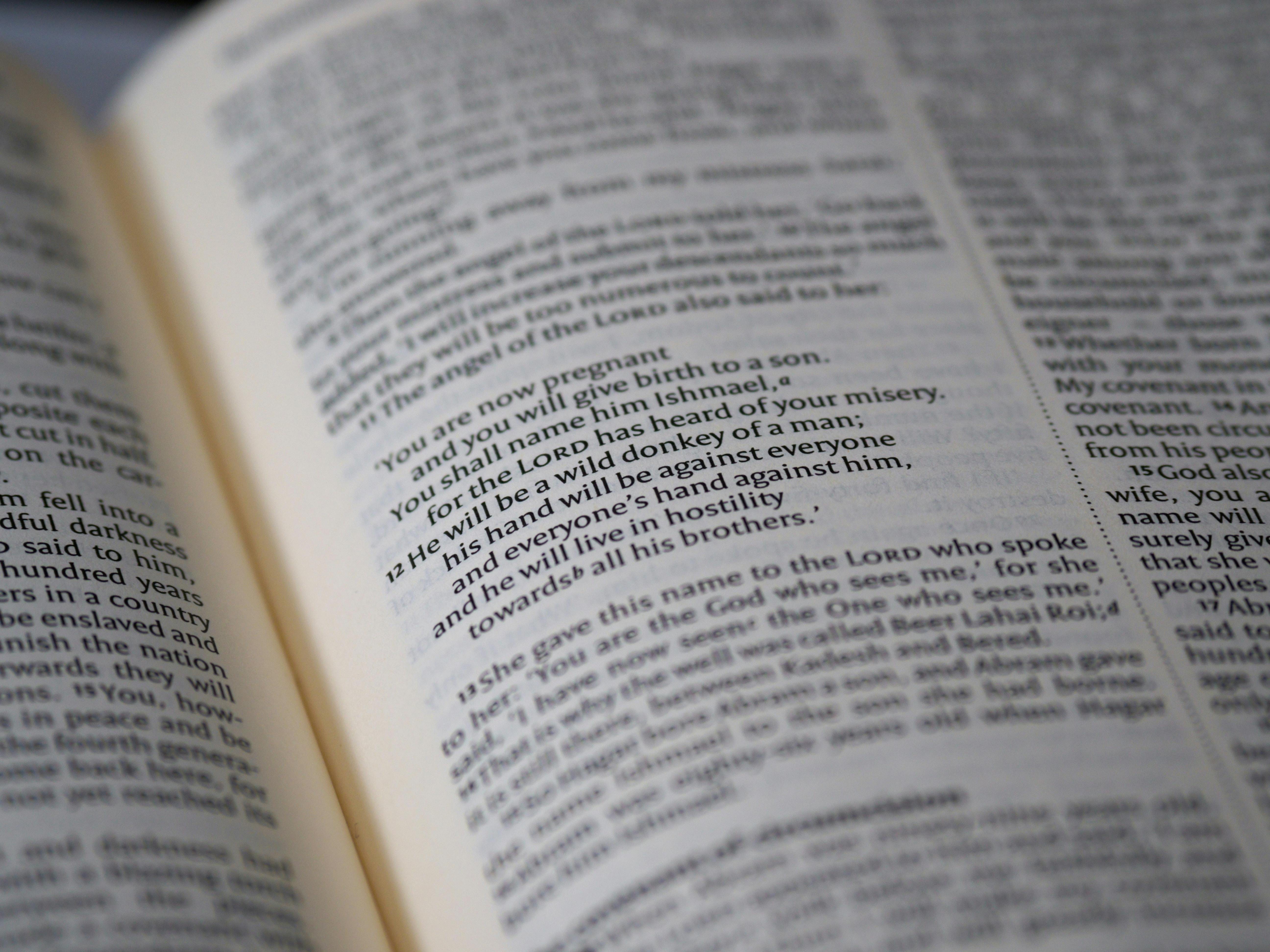
Photo by Brett Jordan
Abarbanel’s Argument
However, the Christians took from Gospel of Matthew the claim that the verse:
“The Lord will give you a sign: behold, the young woman is pregnant and will bear a son, and she will call his name Immanuel”
refers to Mary, who conceived as a virgin and gave birth to Jesus. Yet there are several contradictions to this claim:
First:
The word “behold” (הנה) תמיד indicates something happening immediately. How could it refer to an event hundreds of years later? It should have said “in the end of days.”
Second:
They claim “young woman” (עלמה) means “virgin.” This is false. In Hebrew it can refer even to a woman who is not a virgin, as seen in Proverbs 30, where it clearly refers to a sexually active woman.
Third:
The word “pregnant” (הרה) is in the present tense—she is already pregnant—not that she will become pregnant centuries later.
Fourth:
It says “she will call his name Immanuel.” Yet no one ever called Jesus “Immanuel.” Their claim of “natural vs. assigned names” is empty, because Scripture uses “you shall call” only for assigned names.
Fifth:
It says the child will not yet know good and evil, contradicting their belief that Jesus was perfectly wise from birth.
Sixth:
The prophecy is meant as a sign to Ahaz regarding immediate political danger. How could the sign be something happening 600 years later? A sign must precede or coincide with the event it confirms.
Seventh:
The continuation of the chapter clearly remains focused on Ahaz’s time and the Assyrian threat. It is unreasonable to insert a distant future prophecy in the middle of a continuous historical context.
Some of their scholars tried to argue that sometimes a sign comes after the event (e.g., Moses or Hezekiah), but these arguments are unfounded and misinterpret the verses.
My Takeaway
First of all, Abarbanel was writing to an audience who very well could have been very confused. He says as much earlier in his commentary—that he’s adding in this section “to remove stumbling from my people.”
Abraham Senior, a prominent leader of Spanish Jewry and a close associate of Abarbanel, converted to Christianity in 1492. His conversion led many people to assume that converting was the correct path. So Abarbanel knew he needed to take these claims seriously to keep his people on the correct path.
What’s so remarkable about Abarbanel’s argument is how he stays within the assumptions of his disputant, with the objective of convincing “his people”—not trying to change the Christian’s belief.
There is a great post that I just read by Mijal Bitton, “The Freedom to Be Ourselves,” that I think has an important lesson here. Reflecting on the terror attack this week in London, she writes: “If Hatzalah needs explaining, we’ve already lost.”
Her point—and I highly suggest you read her entire post—is that Jews need to live as Jews without the need to explain or apologize for themselves. And that is what Abarbanel does here: he writes for the Jews, to keep the Jews clear-headed about what is right and wrong. We’ll never convince people who already believe that Jews are the source of suffering in this world.
Instead, let’s focus on ourselves.
I can think of no better thought for us to hold in our minds as we gather together with our families to tell, and reenact, our story.