


Welcome to Gateways, where you experience the Nevi’im—the Prophets—through the teachings of Don Yitzchak Abarbanel, distilled into easy-to-follow lessons.
In today’s lesson, we’re moving on to the fifth prophecy: Isaiah’s vision of God sitting on His throne and selecting Isaiah as the prophet.
In this lesson we’ll cover the second and sixth questions.
My additions here are in italics. I’ve used bold to highlight key ideas and make the content easier to follow. As usual, this is a slightly abridged version.
I’ve included a brief overview, the verses, Abarbanel’s questions and his answers. I’ll conclude with a short takeaway of my own.
Jeff
Overview
From the Abarbanel
The overall intention of this prophecy is to convey a vision of the supernal realms that the prophet saw concerning the structure of existence and its components. This was in order to make known to him the exaltedness and majesty of the Holy One, blessed be He, as well as the minute, detailed nature of His providence in human affairs.
For this was where Uzziah erred—in thinking that God did not pay attention to human affairs, when leprosy broke out on his forehead. And since the people of his generation were also stumbling in that same heresy, the Holy One, blessed be He, foretold their punishment—as will be explained in the verses.
Verses
In the year in which King Uziyahu died, I saw the Lord sitting on a high, raised throne, the helm of His clothing filling the Sanctuary.
There were seraphim standing above Him, each with six wings—with two they covered their faces, with two they covered their feet, and with two they were flying.
And they called out one to another, “Holy, holy, holy—the Lord of Hosts—all the world’s fullness, His glory.”
The door pillars shook with the voice of him who called—and smoke filled the House.
~
9. Go—tell this people: Hear, you shall hear but understand it not, see it all but know it not.
10. Fatten the heart of this people; make their ears heavy; coat their eyes with plaster, lest they see with their eyes and hear with their ears, and their hearts understand and they return—and are healed
Questions
The second question is: what was it that Isaiah saw—this exalted vision of God, His throne, the seraphim, the threefold holiness, and all the other elements—when the subject of the vision and its purpose were to rebuke the people, as it says: “Hear, you shall hear but understand it not… Fatten the heart of this people”?
What connection is there between rebuking the people and the vision of the Divine Chariot? Isaiah prophesied many times rebuking Israel and Judah, and so did the other prophets, yet they did not see this great vision at the beginning of their rebuke.
The sixth question concerns what God commanded him to say to the people: “Go—tell this people: Hear, you shall hear but understand it not, see it all but know it not. Fatten the heart of this people; make their ears heavy; coat their eyes with plaster, lest they see with their eyes and hear with their ears, and their hearts understand and they return—and are healed” (Isaiah 6:9-10).
For this itself was the cause of their sin—that they did not understand the words of the prophet, and that there was no knowledge or insight in his rebukes for them; they did not look to the work of the Lord, nor did they see the work of His hands. How, then, could He command them to act in the opposite way of what was incumbent upon them according to the ways of the Torah and of truth?
All the more so since He explained the reason by saying, “Lest they see with their eyes and hear with their ears, and their hearts understand and they return—and are healed” This sounds as if such an outcome were inappropriate—when on the contrary, this is precisely what ought to happen!
Indeed, perhaps they will see with their eyes, hear with their ears, understand with their heart, repent in repentance, and then the Holy One, blessed be He, will heal them!?
Answers
As we mentioned last week, the people fell into the same belief as Uzziah, that God was unaware of human actions. In answer to the second question, Abarbanel writes:
Now, God showed Isaiah this great vision to inform him of the immense exaltedness of God, and yet, despite all His greatness and elevation, He still exercises awareness over the actions of human beings.
This was so that the prophet would reflect on what Uzziah’s sin truly was—namely, that he did not believe in individual divine providence. This is what is meant by the verse: “ I saw the Lord sitting on a high, raised throne.” And with all His exaltedness and elevation, the hem of His garments filled the Sanctuary, and the entire earth was filled with His glory.
Now on to the answer the sixth question:
This is what is meant by the phrase, “Fatten the heart of this people.” The word hashmen (“fatten”) is an infinitive, as if it said: their heart is fat, sealed, and uncircumcised.. All of this stems from the uncircumcision of the heart, “uncircumcised heart” is a biblical expression for one with a dull intellect.
Thus, the expressions “their ears are heavy” and “their eyes are blinded” may all be understood as infinitives—or the words “heavy” and “blinded” may be traced back to the heart that was mentioned, since it is in its uncircumcised state that it makes the ears heavy and blinds the eyes.
As for the phrase, “lest he see with his eyes,” it is as if to say: should we think that there is still hope that they will return to seeing with their eyes, hearing with their ears, and that their heart will understand through their perceptions—so that they will return to Him and be healed of this evil sickness? This, without a doubt, is impossible. For they are so deeply ingrained in this sickness that they have no remaining hope.
The rebuke is total—the goal is to spurn the people into action, perhaps to prove God wrong. Ineed, Abarbanel offers another approach later in his commentary, suggesting that God was using reverse psychology on the peope: tell them they won’t repent since they always do the opposite of what He asks.
Takeaway
The idea of trying to prove God wrong seems like an odd source of motivation. But in fact, it was the driving force for the Jewish people in the desert after the sin of the spies when they were told that they would not be able to enter the land. Instead, they go fight to try to enter. Of course, they were not successful in their attempt.
What’s interesting here is how God seems to realize that the Jewish people will want to rebel against Him. So, if He says, “You’ll never repent” the people will repent, just to prove Him wrong. Of course, that was God’s plan from the start.
Our relationship with God is deep and complex. Karl Marx infamously said, “Religion is the opium of the people.” I think this statement reveals more about who irreligious Marx was rather than anything about religion.
Having faith means, at times, being confronted with questions. What is happening to our world right now? Why are the Jewish people once again being persecuted? What does the future hold?
The atheist has no struggle with these questions. They are beyond his frame of concern. But for believers, we’re blessed by struggling with these and so many more slings and arrows of outrageous fortune.
I don’t think I need to be explicit: the pogrom on Bondi beach is weighing heavily on all our minds.
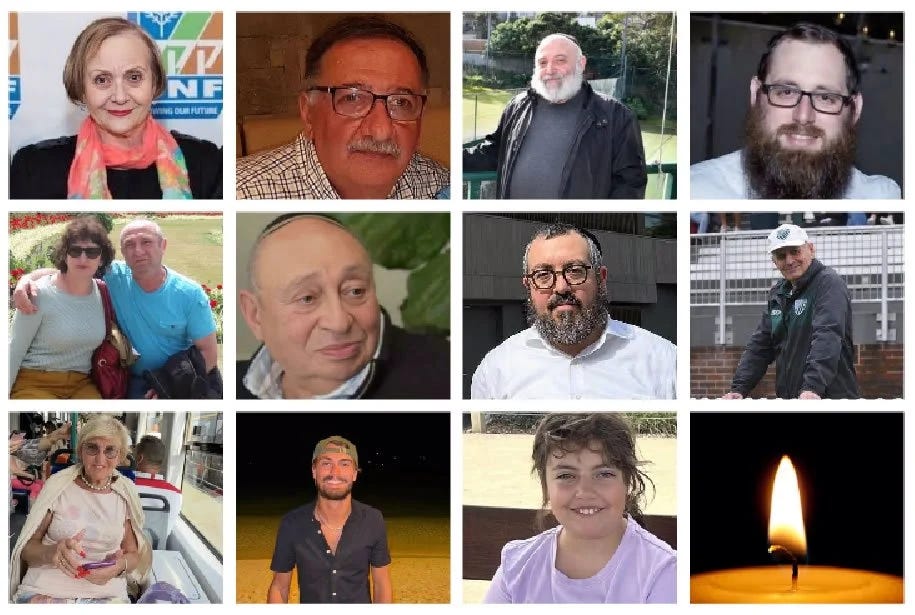
Credit: Chabad.org
Perhaps the lesson of Hanukkah can heal us. We celebrate Hanukkah as a great victory. But it wasn’t a victory without tremendous suffering as well. Indeed, there can’t really be a victory without suffering.
We can ask: what are the areas of life we think we can’t change? What are the things that we are so stuck in our ways? Perhaps those are the things we need to change first.
שבת שלום.