


Hello friends,
Sorry it has been so long, so happy to be back.
For this next installment, I hope to cover the haftarot for the next seven weeks—known as the seven weeks of consolation. These prophecies serve as the bridge from the 9th of Av, when we commemorate the calamities that have happened to us through the centuries, till Rosh HaShana when we coronate our Creator at the start of the New Year.
You might notice a little different format—I’m going to play around and see what seems to work best. As always, I’ll be leaning on the teachings of the great sage, Don Yitzchak Abarbanel.
Jeff
This prophecy is one of the most evocative, and in some ways, problematic. In it, Isaiah (40) opens with:
1. Comfort, comfort, My People — these are your God’s words. 2. Speak to Jerusalem’s heart and call out to her, her legions are filled, her guilt forgiven—she has received double for all her sins from God’s hand.
Abarbanel zeros in on the massive question: where is God’s justice? In his words:
How is it possible for the prophet to say that Israel received double for all her sins? We know that God—He should be blessed—acts with us “Not like our transgression nor our sins have you dealt with us (Psalms 103:10).
If God is so good, as King David writes in Psalms, how is it possible that “we received double for all her sins from God’s hand”? Why did God seemingly over punish us?
Abarbanel offers several answers. The first is from the Midrash: that the double consolation is a reference for the return that will happen after the destruction of the first and second temples. And the repetition is simple there to emphasize God’s consolation.
While this answer addresses the repetition of “comfort, comfort”, it doesn’t address the issue of God’s justice.
Abarbanel then launches into a beautiful approach to explaining each line of this prophecy.
The prophet is speaking to the leaders of the generation and their sages and heads of tribes that they should console the bewildered people and their lengthy exiles and speak to their heart words of appeasement, good words, words of consolation, so that they shouldn’t give up hope during the long exile… “And call to her”, call her to repent to Hashem and do good deeds…
There are three reasons to be consoled:
1) “Her legions are filled”, that is to say that even though now Jerusalem is empty and desolate and dwelling without her children, after the redemption she will once again be filled with her children. The word צבא in this context comes from army, as in “all those who go out to war צבא.
2) “Her guilt forgiven”, she has been forgiven for all her sins.
3) “She has received double for all her sins from God’s hand”, the events were not random, but they came directly from God as a punishment for her deeds. The “double” was stated… to appease her. One who is in pain likes to hear that he has gotten more than he deserved. Like we see with Job, who was upset with his friends when they told him that he deserved exactly what he got.
In other words, we didn’t get more than we deserved. But because God wants us to be consoled, he tells the prophet to tell the people that they in fact got more than was appropriate. This reminds me of Rabbi Shimon Bar Yochai’s explanation for why Avraham got up early in the morning to saddle his donkey to sacrifice his son. It is inappropriate from someone of Avraham’s dignity to saddle his own donkey. Yet, as Rabbi Shimon Bar Yochai explains, אַהֲבָה מְקַלְקֶלֶת אֶת הַשּׁוּרָה, love breaks the lines of what is appropriate. The “received double” is a testament to God’s love for us.
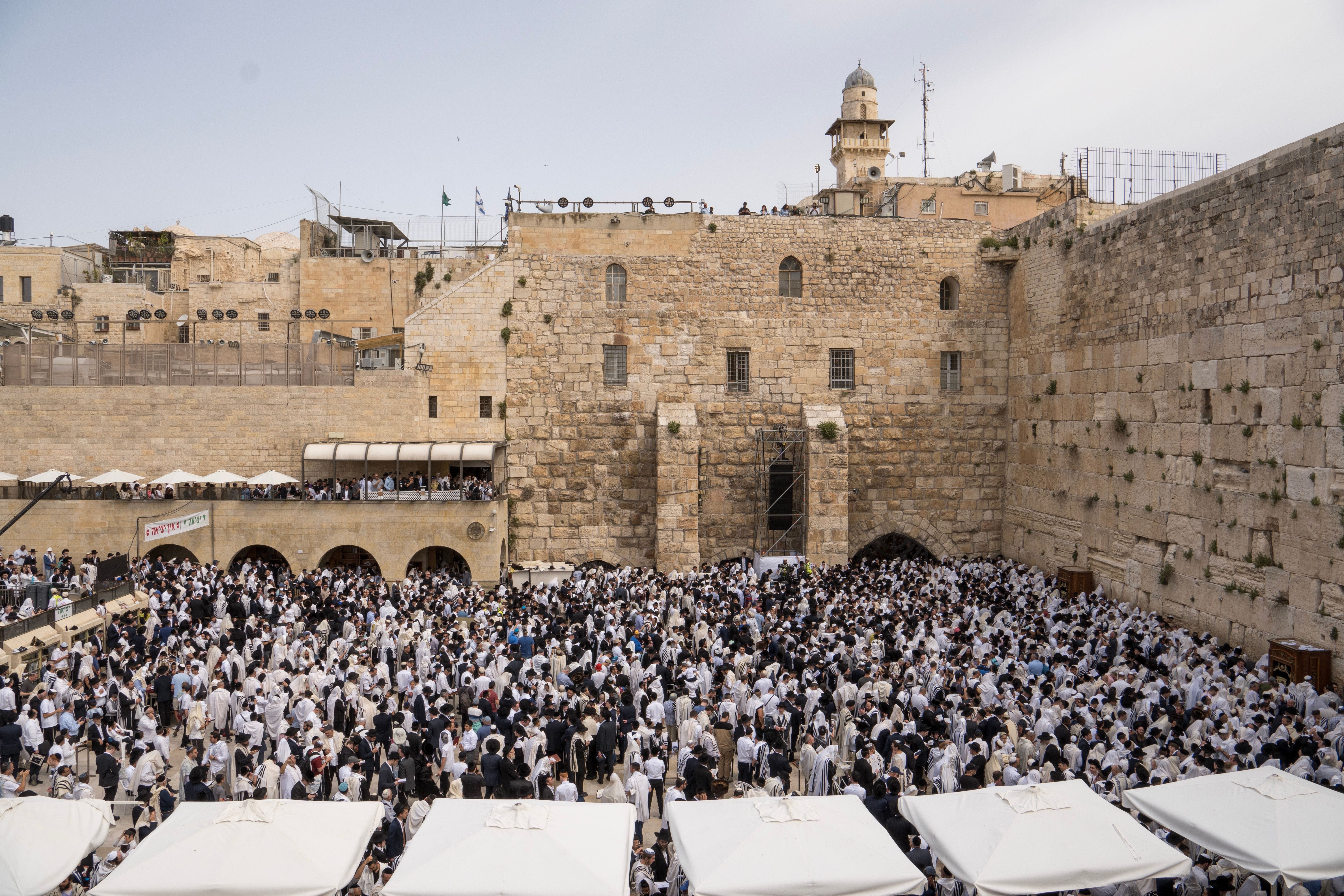
Photo by Anat Landa
It’s worthwhile to step back for a moment and consider when these words were said. Isaiah said them before the destruction of Jerusalem occurred. He knew the destruction was coming, and was telling the future leaders to console the people when the time came. Abarbanel wrote his explanation after the exile of the Jews from the Iberian Peninsula. He followed Isaiah’s advice, and consoled the people as the leader who was part of the exiles and suffered along with the rest. And now, we can read these words, and once again see Jerusalem full with her children.
It makes me think that there is no time in history when it is easier to believe in God, His promises, and the final redemption.